Home › Guides › Scottish Deerhound vs Irish Wolfhound
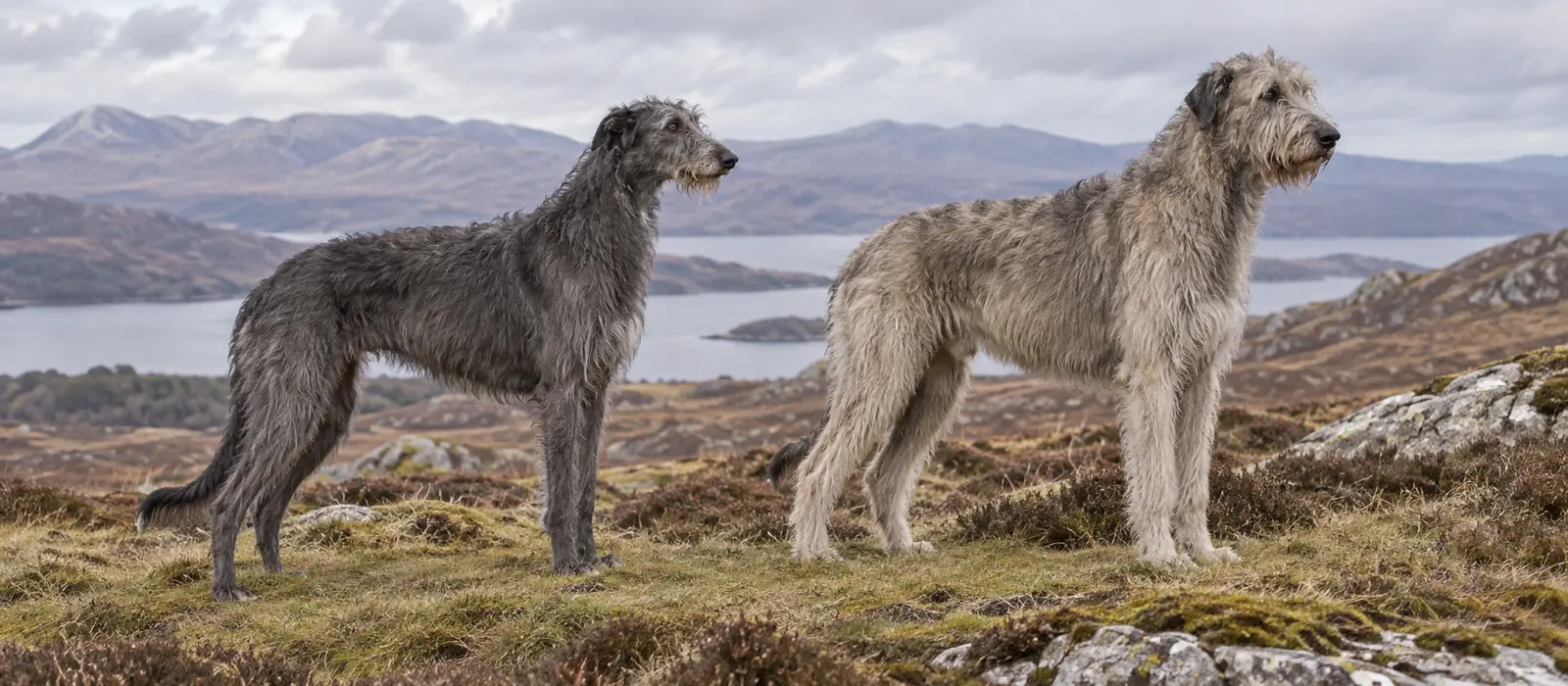
If you’re considering a tall sighthound from the British Isles, you’ve likely noticed Scottish Deerhounds and Irish Wolfhounds frequently compared. Both are large, ancient breeds developed for hunting in their native lands, yet they differ significantly in size, temperament, exercise demands, and health. Understanding these differences helps you choose the right companion for your household.
Origin and History
The Scottish Deerhound emerged from the Scottish Highlands as a specialized hunting dog capable of pursuing and pulling down red deer across rough terrain. The breed’s history is intertwined with Highland estate management, where skilled hunters prized the deerhound’s speed, endurance, and climbing ability.
The Irish Wolfhound follows a more dramatic historical arc. Originally developed by crossing greyhound-type dogs with Mastiffs to create large, fast hunters capable of pursuing wolves in Ireland, the breed nearly became extinct by the 1840s. Selective breeding revived the breed from near-extinction, and today it is designated as a vulnerable native breed.
Size and Weight
This is the most obvious distinction between the two breeds. The Kennel Club’s Breed Standards specify minimum heights to show how substantially different these giants actually are:
Scottish Deerhound
- Minimum height: Dogs 76 cm (30 inches); bitches 71 cm (28 inches)
- Typical weight: Dogs approximately 45.5 kg (100 lbs); bitches approximately 36.5 kg (80 lbs)
Irish Wolfhound
- Minimum height: Dogs 79 cm (31 inches); bitches 71 cm (28 inches)
- Minimum weight: Dogs 54.5 kg (120 lbs); bitches 40.9 kg (90 lbs)
In practice, Irish Wolfhounds often exceed these minimums, with many dogs reaching 81–86 cm (32–34 inches). The Irish Wolfhound is the taller, heavier breed—roughly 20 percent heavier than a comparable Deerhound.
Coat and Appearance
The Deerhound’s coat is distinctively “shaggy, but not overcoated.” According to the Breed Standard, the coat is “thick, close lying, ragged; harsh or crisp to the touch.” Body hair measures 8–10 cm long, while head and belly hair is considerably softer. The result is a rougher, shaggier appearance that reflects its working heritage in harsh terrain.
The Irish Wolfhound carries a “rough and harsh” coat on body, legs, and head, “especially wiry and long over eyes and under jaw.” The coat comes in grey, brindle, red, black, pure white, fawn, wheaten, and steel grey. Despite the harshness described in the standard, the Wolfhound carries a more polished appearance than the Deerhound, lending itself the description “a gentle giant.”
Temperament and Personality
The Deerhound’s temperament is described as “gentle and friendly. Obedient and easy to train because eager to please.” The breed carries itself “with quiet dignity” and a “docile nature.” Deerhounds are “never suspicious, aggressive or nervous.” As a sighthound, they are dignified and aloof yet trustworthy companions.
The Irish Wolfhound combines “gentle, kind and friendly nature” with “great power, activity, speed and courage.” Despite substantial size and strength, the breed’s temperament emphasizes calmness and composure—truly a gentle giant. The Wolfhound’s temperament is similarly trustworthy, though it carries an air of formidable capability.
Exercise Requirements
Both breeds require substantial daily exercise—the Kennel Club specifies over 2 hours of daily exercise for both. The Deerhound’s breeding for deer coursing across rough Scottish terrain demands energy and stamina. The Irish Wolfhound, despite centuries of hunting wolves and wild boar, is described as “easy and active” in movement yet calm at home.
Neither breed is suitable for apartment living or small urban homes. Both require a large house with a large garden and country living to thrive. Confining either breed to town life or minimal outdoor space would be incompatible with their nature.
Lifespan
The Kennel Club’s breed information specifies different life expectancies:
Scottish Deerhound: Over 10 years
Irish Wolfhound: Under 10 years
The Deerhound typically enjoys longer life. This reflects a general pattern in canine genetics: larger breeds tend toward shorter lifespans. An Irish Wolfhound owner should anticipate a slightly shorter time with their companion and plan accordingly for health management and quality-of-life considerations in later years.
Health Considerations
Both breeds are designated as vulnerable or rare, reflecting their modest breeding populations. The Kennel Club emphasizes “absolute soundness is essential” for both breeds and directs owners to Breed Watch information for current health concerns.
The Deerhound, being somewhat smaller and less extreme in type, often experiences fewer structural health challenges than the Wolfhound. However, both giant breeds share common concerns related to size: joint development, bone strength, and cardiac health are areas requiring veterinary attention during growth and aging.
Which Home Suits Which Breed?
Choose a Scottish Deerhound if:
- You have country space and substantial daily exercise time (2+ hours)
- You prefer a slightly smaller giant breed (still 30 inches but lighter)
- You value a longer potential lifespan
- You want a breed with established, stable temperament in modern homes
- You can accommodate regular grooming for the shaggy coat
Choose an Irish Wolfhound if:
- You have country space and substantial daily exercise time (2+ hours)
- You want the tallest hound breed, impressive in stature
- You appreciate the breed’s dramatic historical revival story
- You understand and accept a shorter lifespan (under 10 years)
- You prefer the rougher coat and striking visual presence
- You are comfortable with a vulnerable native breed and its breeding considerations
Both breeds demand experienced ownership, country living, substantial space, and genuine commitment to meeting their exercise and space needs. Neither tolerates urban living, apartment confinement, or neglect well. Potential owners should visit both breeds in person, meet established dogs and their owners, and honestly assess whether their home, property, and lifestyle genuinely accommodate a large, energetic sighthound.
Key points
- Irish Wolfhounds are 20% heavier on average; both require 2+ hours daily exercise and country living
- Deerhounds live longer (over 10 years) while Wolfhounds typically live under 10 years
- Both temperaments are gentle, calm, and trustworthy despite their size and hunting heritage
- Coat difference: Deerhounds are shaggier; Wolfhounds carry a rougher, more polished appearance
- Neither breed suits urban homes, apartments, or owners without substantial outdoor space
Related: Deerhound help near you