Home › Guides › Scottish Deerhound breed guide
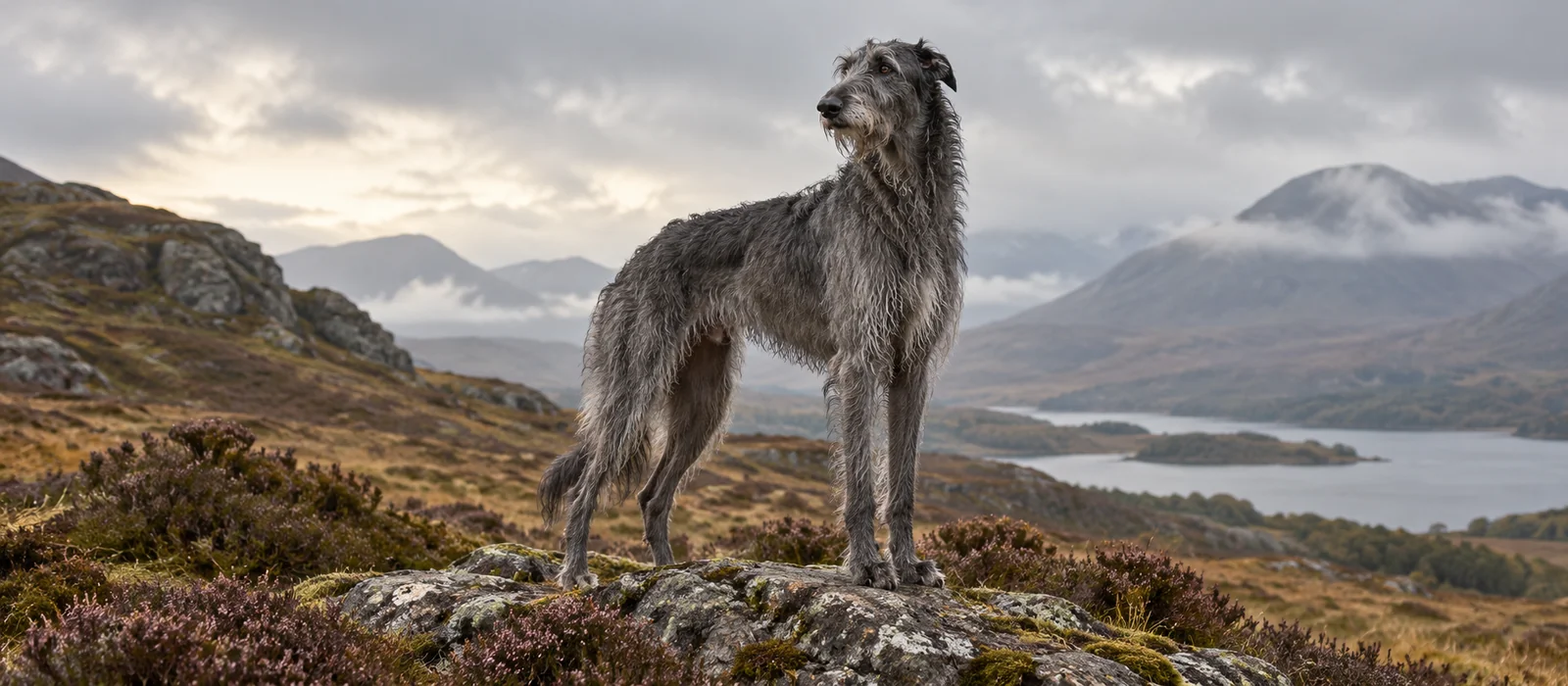
The Scottish Deerhound is a giant sighthound with deep historical roots in Scotland, known for a gentle temperament that belies its athletic build. These dogs were originally bred to course and catch deer, but today they make loyal companions for owners who can provide the space, exercise, and understanding they need.
Breed origin and history
The Scottish Deerhound’s lineage extends back at least 500 years in the Scottish Highlands. Originally called the Scottish Wolfdog, the breed transitioned to deer coursing as wolf populations declined over the centuries. The Victorian era brought renewed enthusiasm for the breed, and it has remained popular since then. In the modern era, the Kennel Club recognises the breed as a “vulnerable native breed”—a designation reflecting its smaller population compared to more common breeds.
Kennel Club breed standard
The Royal Kennel Club publishes the official breed standard, last updated in August 2025, which defines what breeders and judges use as the benchmark for the breed.
Size and build: Dogs stand at a minimum of 76 centimetres (30 inches) at the withers and typically weigh approximately 45.5 kilograms (100 pounds). Bitches stand at a minimum of 71 centimetres (28 inches) and weigh approximately 36.5 kilograms (80 pounds). The breed “resembles a rough-coated greyhound of larger size and bone,” combining speed, power, and endurance.
Coat and appearance: The coat should be “shaggy, but not overcoated” with a “thick, close-lying, ragged” texture that feels “harsh or crisp to the touch.” Hair on the body measures 8 to 10 centimetres in length, while hair on the head, breast, and belly is softer. The skull is flat, with a soft, silky moustache and beard. Ears are small, glossy, and folded back at rest, raising slightly when the dog is alert.
Colour: Acceptable colours include dark blue-grey, lighter greys, brindles, yellows, sandy-red, or red fawns with black points. White on the chest, toes, or tail tip is permissible but discouraged. White blazes or collars are unacceptable according to the standard.
Temperament and character: Deerhounds are described as “gentle and friendly” with an “obedient” nature. The breed displays docility and carries itself with quiet dignity, never showing suspicion, aggression, or nervousness. Absolute soundness—physical and temperamental—is essential.
Living with a Scottish Deerhound
These are sensitive, intelligent dogs that form deep bonds with their families. They are not aggressive but require owners who respect their prey drive (inherited from their hunting heritage) and can provide appropriate outlets for their energy.
Space and environment: Deerhounds need a large house with a large garden. They are too large for flats or small homes, as they require both substantial indoor space to move comfortably and significant outdoor space for exercise and enrichment. Many owners describe them as “40-mile-per-hour couch potatoes”—dogs that rest quietly indoors but need access to large, secure gardens or regular visits to open spaces where they can run at speed. Their size means they also displace considerable space within a home; a Deerhound’s tail alone can clear a coffee table in a single sweep.
Exercise requirements: The breed requires more than 2 hours of exercise per day to maintain physical health and mental wellbeing. This should include free running in secure fields (not just lead walking) to satisfy their natural coursing instincts. Owners must have access to safely enclosed spaces where the dog can run off-lead without risk of chasing livestock or becoming lost. Without adequate exercise, Deerhounds can develop behavioural problems including destructiveness and anxiety.
Shedding and grooming: Deerhounds shed considerably throughout the year, with heavier shedding during spring and autumn. They require grooming more than once per week to manage their rough coat and reduce shed hair throughout the home. Regular brushing also helps maintain skin health and allows early detection of skin problems. Many owners find that weekly grooming sessions are a valuable bonding time with their Deerhound.
Lifespan and health: The breed’s lifespan is typically over 10 years, though individual dogs vary considerably. Some Deerhounds live into their early teens with good care and luck. Like all giant breeds, Deerhounds are susceptible to certain health conditions, including heart disease, bone cancer, and bloat (gastric dilatation-volvulus), which is a life-threatening emergency requiring immediate veterinary treatment.
Temperament with family: Deerhounds are gentle with their own families but retain strong prey drive. They are not guard dogs but rather aloof and dignified. They may be reserved with strangers but are not hostile. Their gentleness extends to children within their family, though their size means supervision with small children is important to prevent accidental injury from a wagging tail or playful jump. Many owners note that Deerhounds are sensitive to their owner’s emotions and respond well to calm, kind handling but may withdraw if treated harshly.
Suitability for first-time owners: While Deerhounds’ gentle temperament makes them seem accessible to first-time dog owners, their size, exercise needs, and prey drive make them most suitable for experienced dog owners. First-time owners should consider working with breeders or rescue organizations that can provide ongoing support and guidance.
Key points
- The Scottish Deerhound is a giant sighthound with a gentle, obedient temperament and ancient Scottish hunting heritage.
- Official size ranges from 71–76 centimetres at the withers, with shaggy, ragged coats in grey, brindle, or fawn shades.
- These dogs require more than 2 hours of daily exercise and secure outdoor space for free running.
- Deerhounds shed heavily and need grooming more than once weekly.
- They are sensitive, intelligent dogs requiring owners who understand their prey drive and can provide appropriate outlets for their energy.
Related: Deerhound help near you