Home › Guides › Feeding a Scottish Deerhound
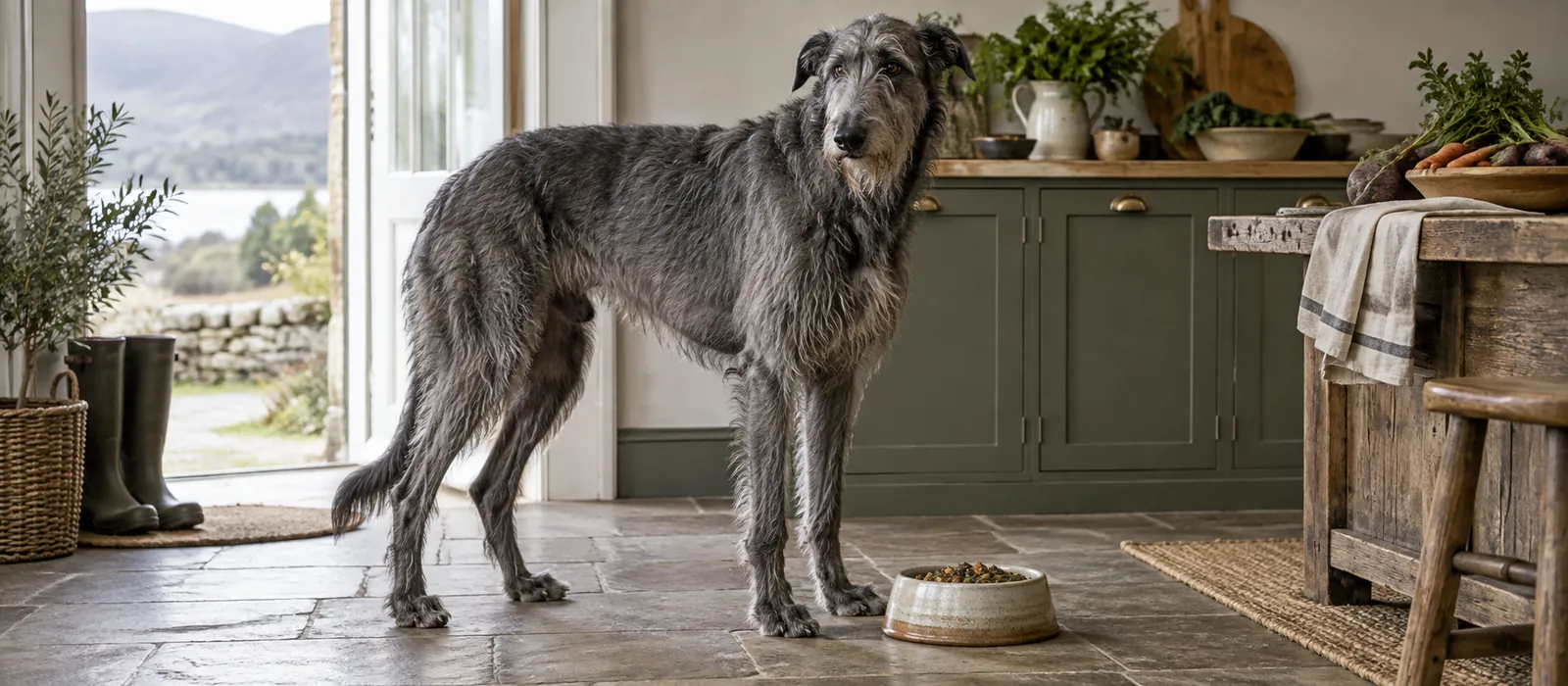
Scottish Deerhounds are giant dogs with special nutritional needs. Proper feeding from puppyhood through adulthood is crucial to support growth, maintain ideal body weight, prevent bloat, and promote long-term health. This guide covers what and how to feed a Deerhound at each life stage.
Feeding puppies: controlled growth and joint protection
Giant breed puppies grow rapidly, and rapid growth can stress developing bones and joints. The goal is steady, controlled growth rather than as-fast-as-possible development.
Appropriate diet: Feed a large or giant breed puppy formula specifically formulated for large dogs. These diets have carefully balanced calcium, phosphorus, and calories to support healthy growth without excessive rapid weight gain. Follow the breeder’s recommendation on food brands initially, as your puppy will already be eating that diet. If you wish to change food, do so gradually over 7–10 days, mixing increasing proportions of new food with the old to avoid digestive upset.
Portion control: Overfeeding is common in puppy-raising and can lead to excessively rapid growth. Follow the food manufacturer’s feeding guidelines for your puppy’s age and expected adult weight. Ask your veterinarian or breeder about appropriate portions, as individual puppies vary. Weigh your puppy regularly (your vet can do this) to ensure steady growth without excessive weight gain.
Meal frequency: Young puppies (8 weeks to 4 months) typically eat three or four times daily. From 4 to 6 months, reduce to three meals. From 6 months to 12 months, move to two meals daily. By 12–18 months, most Deerhounds can transition to once or twice daily feeding, though many owners prefer continuing twice daily indefinitely.
Growth plate closure: Deerhound growth plates typically close around 12–18 months of age, though this varies individually. Avoid strenuous exercise or jumping during this period, and continue growth-appropriate nutrition until your vet confirms growth plates have closed. Some breeders recommend extending puppy diet through the first 18 months.
Calcium and phosphorus: Excessive calcium supplementation can cause skeletal problems in giant breed puppies. A properly formulated large-breed puppy diet contains adequate calcium and phosphorus; never add extra supplements without veterinary guidance.
Feeding adult Deerhounds: maintaining ideal weight
Once your Deerhound reaches adulthood (typically 12–18 months), transition to adult dog food. Continue feeding a diet formulated for large or giant breeds, or consult your veterinarian about a diet suited to your individual dog’s needs.
Body condition: Maintaining ideal body weight is essential for long-term health and reduces stress on joints and the heart. You should be able to feel your Deerhound’s ribs with gentle pressure but not see them protruding. When viewed from above, your dog should have a visible waist. If your Deerhound is overweight, reduce portions gradually and ensure adequate exercise. Obesity increases the risk of joint problems, heart disease, and diabetes. Conversely, underweight dogs may lack energy and be prone to illness.
Meal frequency: Many owners feed adult Deerhounds once daily, while others prefer twice-daily meals. Twice-daily feeding has advantages for giant breeds: it divides calorie intake, which may reduce bloat risk (see below), and provides structure to the day. Discuss with your veterinarian whether once or twice daily feeding is appropriate for your dog.
Consistent portions: Feed the same amount at the same times each day. This routine helps maintain stable blood sugar and is easier for managing weight. Avoid leaving food down continuously (“free feeding”), which makes portion control difficult.
Water: Provide constant access to clean, fresh water. Your Deerhound should drink regularly throughout the day and night.
Bloat risk and meal management
Bloat (gastric dilatation-volvulus or GDV) is a life-threatening emergency more common in giant, deep-chested breeds like Deerhounds. While the exact cause is not fully understood, several management strategies may reduce risk:
Meal size: Feeding two or three smaller meals per day instead of one large meal may reduce bloat risk. Avoid very large meals.
Feeding schedule: Feed meals at regular times and remove uneaten food after 15–20 minutes. Do not leave food down for “grazing.”
Exercise timing: Avoid vigorous exercise, play, or running for at least 1–2 hours after feeding and 2–3 hours before feeding. Strenuous activity on a full or recently full stomach may increase bloat risk.
Water management: While your dog needs constant access to water, do not allow excessive drinking immediately before or after meals. Limit water intake for 30–60 minutes after feeding.
Eating speed: Some giant breeds eat very quickly, which may increase bloat risk. If your Deerhound eats rapidly, consider using a slow-feeder bowl that has raised ridges or chambers to slow intake.
Know the signs: Bloat is a medical emergency requiring immediate veterinary treatment. Signs include a visibly distended or tense abdomen, restlessness, inability to get comfortable, retching without vomiting, excessive drooling, or signs of pain. Contact your vet immediately if your dog shows any of these signs—do not delay.
Food types: wet, dry, and raw
Different food types have benefits and drawbacks:
Dry kibble: Convenient, cost-effective, and easy to portion. Quality varies widely; look for foods with named meat as the primary ingredient and formulated specifically for large or giant breeds. Dry food may be less palatable to some dogs but is often recommended by vets for dental health (though brushing teeth is more important).
Wet/canned food: More palatable and higher moisture content, which may benefit some dogs. Generally more expensive and calories vary widely. Always use food formulated for large or giant breeds.
Raw or home-cooked diets: Some owners prefer raw or cooked diets. These require careful formulation to ensure adequate nutrients and appropriate calcium-phosphorus ratios, particularly for puppies. Consult a veterinary nutritionist before feeding raw or home-cooked diets to ensure nutritional completeness.
Whatever diet you choose, ensure it is formulated for large or giant breeds and suitable for your dog’s age and health status. Your veterinarian can recommend specific brands if you are unsure.
Treats and snacks
Treats should account for no more than 10 per cent of your dog’s daily calorie intake. Use small, low-calorie treats for training and rewards. Avoid chocolate, grapes, raisins, onions, and other toxic foods. Some owners use pieces of cooked chicken or carrot as low-calorie treats.
Monitoring and adjusting diet
Monitor your Deerhound’s weight and body condition regularly. If your dog is gaining or losing weight inappropriately, or if you notice changes in eating or drinking habits, consult your veterinarian. These changes can indicate underlying health problems requiring investigation.
Discuss your dog’s diet at routine veterinary check-ups. Your vet can assess body condition and recommend dietary adjustments if needed.
Key points
- Feed large or giant-breed puppy formulas to support controlled growth; avoid rapid weight gain or excessive calcium supplementation.
- Maintain ideal body weight in adult Deerhounds; you should be able to feel ribs with gentle pressure but not see them protruding.
- Consider twice-daily feeding to reduce bloat risk and provide meal structure; avoid very large single meals.
- Avoid vigorous exercise for 1–2 hours after feeding and 2–3 hours before feeding to reduce bloat risk.
- Know the signs of bloat (distended abdomen, restlessness, retching, excessive drooling) and seek immediate veterinary care if they appear.
- Discuss your Deerhound’s diet with your veterinarian regularly to ensure it suits their individual needs and life stage.
Related: Deerhound help near you