Home › Guides › Exercising a Scottish Deerhound
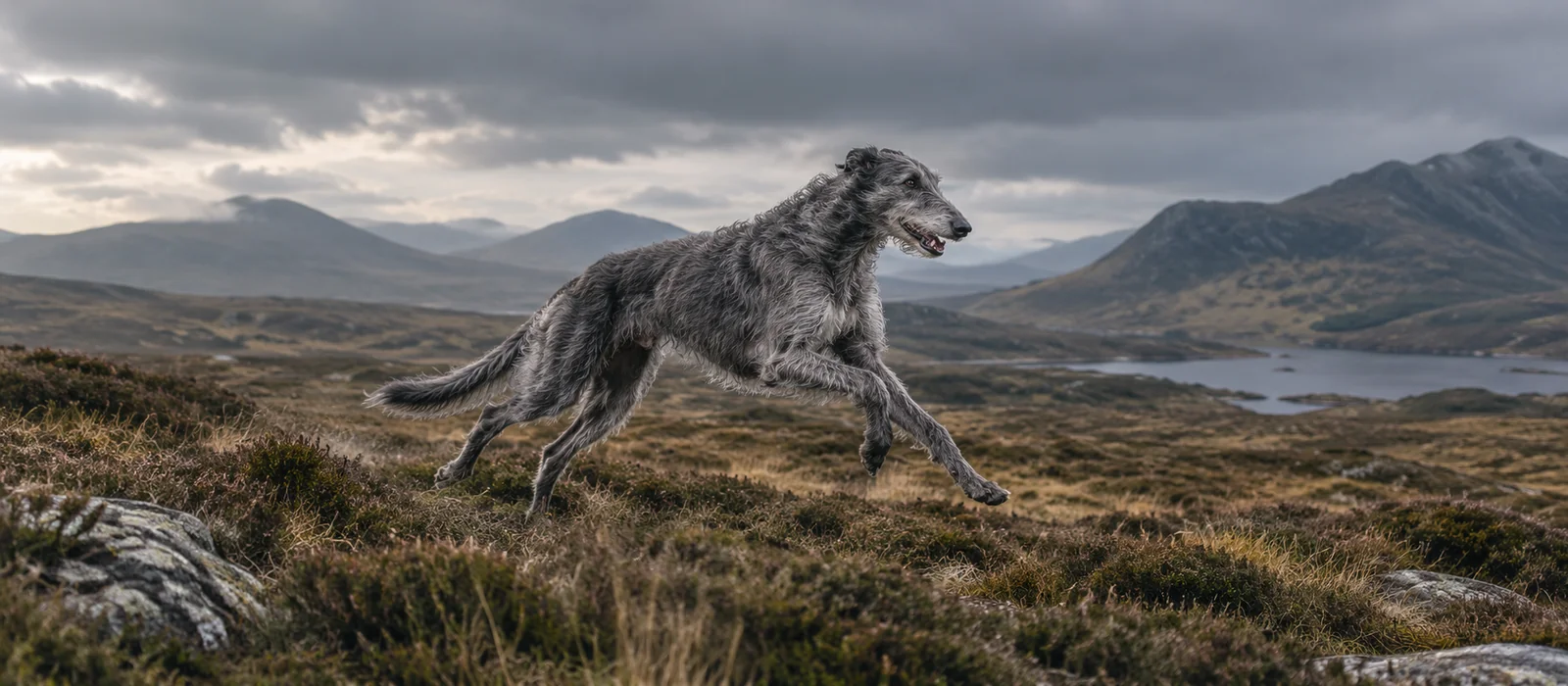
Scottish Deerhounds are athletic sighthounds requiring substantial daily exercise. Their exercise needs differ significantly depending on their age and developmental stage. This guide covers safe exercise from puppyhood through old age, managing prey drive, recall training, and the legal responsibilities of exercising your Deerhound in the UK.
Exercise requirements for adult Deerhounds
Adult Deerhounds require more than 2 hours of daily exercise to maintain physical health and mental wellbeing. This should include a mix of:
Free running: Access to secure fields where your Deerhound can run at speed and satisfy their natural coursing instincts. A safe, enclosed space—ideally at least several acres with secure fencing—is essential. Many owners use local dog parks, off-lead areas, or private land to provide this opportunity.
Lead walking: Daily walks on-lead through varied terrain (hills, different surfaces, interesting routes) provide cardiovascular exercise and mental stimulation. Lead walking helps maintain fitness and strengthens your bond.
Play and interaction: Playing fetch or chase games with toys provides exercise and enrichment, though many Deerhounds lose interest in toys compared to their interest in chasing live prey (see Prey Drive section below).
Variation: Variety in exercise location and activity helps prevent boredom and keeps your dog mentally stimulated.
Exercise for puppies: protecting growing bones
Puppies require less exercise than adults, and inappropriate exercise during the growth phase can damage developing joints and bones. Growth plates typically close around 12–18 months in Deerhounds, though this varies individually.
Controlled exercise: Avoid extended runs or jumping during the growth period. Short walks with frequent rest periods, split into multiple shorter sessions across the day rather than one long outing, are generally preferred while your puppy is still growing—ask your vet for guidance suited to your individual puppy’s age and development.
Avoid jumping: Restrict access to stairs, avoid encouraging jumping up or off furniture, and avoid fetch games that involve jumping or sudden stops. These can stress developing growth plates.
Free play: Puppies benefit from free play with other puppies or young dogs in controlled settings, as they naturally moderate their own activity. However, supervise play to prevent overexertion.
Lead training: Begin lead walking early using a well-fitting harness (better than collars for sighthounds, which can cause neck injury). Short, frequent lead walks build fitness without excessive stress.
Socialisation: Use gentle exercise—short walks to different environments—as a means of safe socialisation during the early weeks of puppyhood, when positive experiences of new people, places, sights and sounds shape future behaviour, rather than high-intensity running or jumping.
Growth plate closure: Once your vet confirms that growth plates have closed (typically 12–18 months), you can gradually increase exercise intensity and duration. Even then, avoid excessive impact exercise in young adults; build fitness gradually.
Free running and recall: managing prey drive
Deerhounds were bred to chase and catch deer, and this prey drive remains strong. Many Deerhounds respond enthusiastically to the movement of small animals, birds, or even distant livestock.
Secure spaces: Free running should occur only in securely fenced or enclosed areas where your Deerhound cannot chase wildlife, livestock, or escape to roads. Check fencing carefully; some Deerhounds are capable of jumping or squeezing through gaps.
Recall training: Reliable recall is essential before allowing off-lead exercise. Begin recall training in puppyhood using high-value rewards (favourite treats or toys). Practice in controlled environments first, gradually introducing distractions. However, be realistic: many Deerhounds will not reliably ignore prey in motion, even with excellent training. Some owners use a long training line attached to the harness as a safety measure during off-lead time, allowing the dog freedom while maintaining control if needed.
Selective attention: If your Deerhound spots moving prey (rabbit, hare, bird, or other wildlife) at a distance, they may be unable to override their instinct to chase, even if well-trained. Plan exercise accordingly—exercise in areas away from wildlife where possible, or accept that your dog may occasionally chase and may not respond immediately to recall.
Lost dog risk: If your Deerhound becomes distracted and ignores recall, they can travel long distances in pursuit of prey. Ensure your dog is microchipped and registered (by law, by 8 weeks of age) and wears a collar with your current contact details at all times when exercising off your property.
Livestock and the law
The Dogs (Protection of Livestock) Act 1953 is a serious legal matter for dog owners in the UK. Under this law:
Offence: It is an offence to allow your dog to be “at large without a lead or close control” in fields containing sheep, or for your dog to chase livestock in ways that “may reasonably be expected to cause injury or suffering.”
Protected animals: “Livestock” includes cattle, sheep, horses, goats, swine, poultry, camelids, and (in Scotland) farmed deer and game birds. This directly affects Deerhound owners, as the breed’s deer-coursing heritage makes them particularly likely to chase these animals.
Penalties: In England and Wales, conviction carries a fine, and courts may order forfeiture of the dog or disqualify the owner from owning dogs for a specified period; a 2025 amendment increased the maximum penalty available. In Scotland, a separate 2021 amendment introduced tougher penalties, including potential imprisonment of up to 12 months and fines up to £40,000.
Enforcement: Police have powers to seize dogs suspected of attacking or worrying livestock and may detain them during investigations.
Practical implications: Avoid exercising your Deerhound in areas with grazing livestock unless you have full control via a lead. Even if your dog shows no interest in livestock at your local park, if livestock are present in any field you use regularly, keep your dog on-lead. Sighthounds’ prey drive can be unpredictable, and the legal and financial consequences of a livestock incident are severe.
Lead walking and public spaces
When lead walking, use a well-fitting harness rather than a collar. Sighthounds can have delicate neck structures, and sudden pulling against a collar can cause injury. Choose sturdy, comfortable leads.
In public spaces and on pavements, maintain good control via lead. The Kennel Club Breed Standard emphasizes that Deerhounds should never show aggression, and most are friendly with people, but on-lead control is responsible ownership.
Exercise for older Deerhounds
Elderly Deerhounds still need daily exercise, but the intensity and duration should decrease. An older Deerhound might manage one or two shorter walks daily rather than vigorous running.
Watch for stiffness: Some older dogs experience stiffness first thing in the morning or after rest. A short, gentle walk helps warm up joints. Your vet may recommend joint supplements or pain relief if arthritis develops.
Swimming: Low-impact exercise like swimming (if your dog enjoys it) can be excellent for maintaining fitness and joint health in older dogs without jarring bones and joints.
Mental stimulation: As physical exercise capacity decreases, maintain mental engagement through scent work, training, puzzle toys, or guided walks to interesting locations.
Health monitoring: If your older Deerhound shows reluctance to exercise, excessive panting, coughing, or difficulty, discuss this with your vet. These can indicate heart disease, joint problems, or other age-related conditions requiring management.
Key points
- Adult Deerhounds require more than 2 hours of daily exercise including free running in secure spaces and lead walking.
- Puppies require controlled, age-appropriate exercise; avoid jumping and strenuous activity until growth plates close (12–18 months).
- Prey drive is strong and often overrides recall training; exercise in secure, enclosed spaces and accept that your dog may chase wildlife.
- Microchip your Deerhound and ensure they wear a collar with your contact details; they can travel long distances if distracted by prey.
- Under the Dogs (Protection of Livestock) Act 1953, it is illegal to allow your dog off-lead near grazing livestock; convictions carry fines and potential imprisonment.
- Use a harness rather than a collar for lead walking to protect the neck.
- Older Deerhounds need less intense exercise but still benefit from daily activity; watch for signs of joint problems or heart disease and adjust exercise accordingly.
Related: Deerhound help near you