Home › Guides › Dog Microchip UK: Check, Update, and Change Address
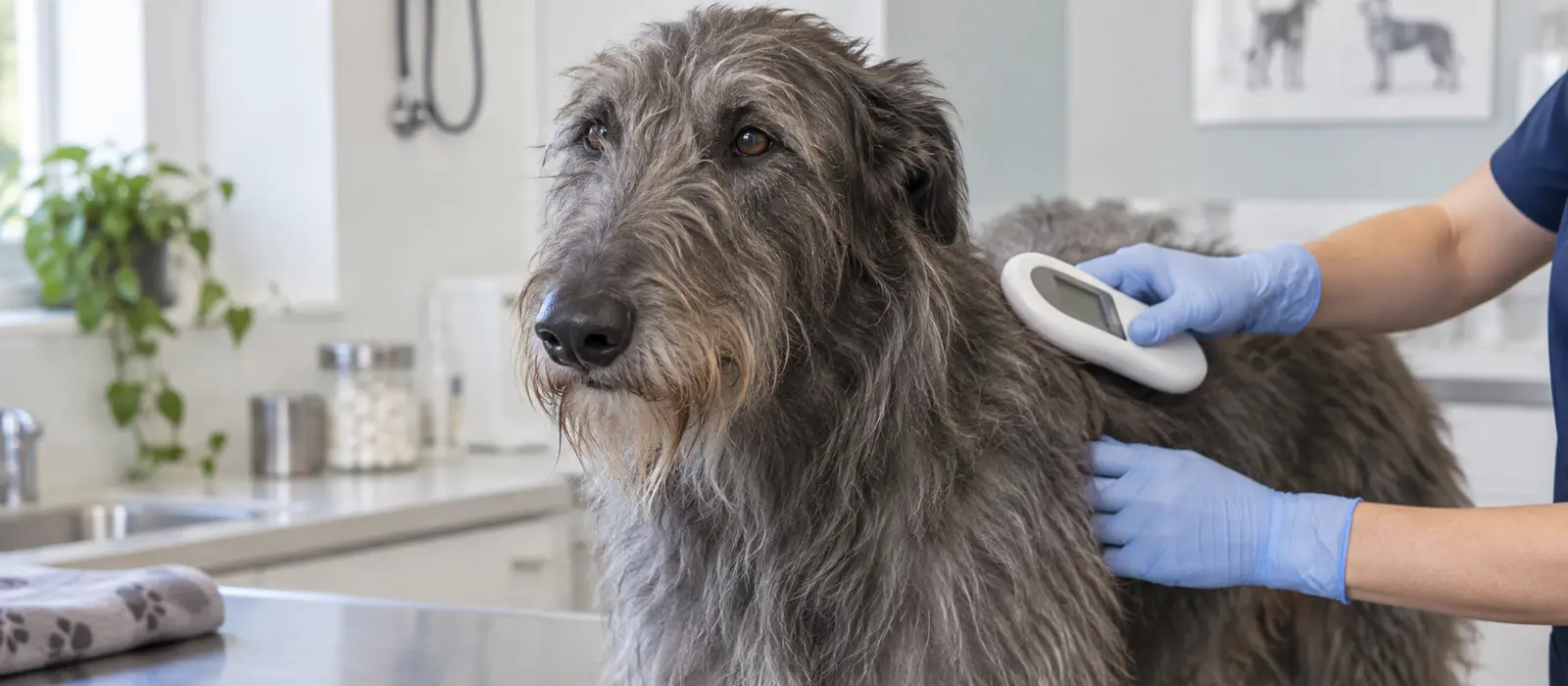
Microchipping has been a legal requirement for dogs in the UK for several years. Whilst many owners understand the basic concept—a small implant registers their dog’s identification—fewer understand the full scope of the regulations, their ongoing responsibilities, or what to do when circumstances change. This guide explains the law, how to verify your dog’s microchip status, and how to keep registration details current.
The Law: Microchipping Requirements
Since 2016, all dogs in England, Wales, and Scotland must be microchipped. The legal requirement is specific:
All dogs must be microchipped and registered by 8 weeks of age.
This requirement applies regardless of whether the dog is purchased from a breeder, rescue centre, or other source. Breeders are responsible for microchipping puppies before they leave their mother; new owners then update the registration details. If a dog is not microchipped by eight weeks, or registered details are not kept current, the keeper (owner) is liable to a fine of up to £500.
The microchip must be implanted by a trained professional. Veterinary surgeries, local councils, and animal rescue centres offer microchipping services, typically for a fee. The procedure is simple and quick: a needle-sized implant (approximately the size of a grain of rice) is inserted under the skin, usually between the shoulder blades.
Finding Your Dog’s Microchip Number
If your dog was microchipped, you should have received documentation at the time. This might include:
- A microchip certificate provided by the veterinary surgeon or professional who implanted the chip
- Vaccination records that often reference the microchip number
- Breeder records or the original purchase/adoption paperwork, which may state the number
If you cannot find the number in paperwork, a veterinary surgeon can scan your dog with a microchip scanner and read the number. Most vets will do this as part of a routine appointment at no additional charge. Some councils and rescue organisations also offer scanning services.
Once you have the number, record it in a safe place—a note in your phone, a document at home, and ideally with your veterinary practice.
Checking Which Database Holds Your Dog’s Information
Once you have your dog’s microchip number, you can determine which database holds your dog’s registration. The UK has a number of government-approved microchip databases, including well-known providers such as Petlog.
Online check services: gov.uk links to a “check-a-chip” service where you enter your dog’s microchip number and it tells you which database holds the registration. If you do not know which database to contact, this is the recommended starting point.
Via a vet or council: Your veterinary practice can help identify which database holds your dog’s information. Local dog wardens and animal control officers also have access to scanning and database-lookup systems.
Updating Your Dog’s Details
If you have moved house, changed your phone number, or changed your address, you must update your dog’s microchip registration. This is your legal responsibility as the keeper. Updated details ensure that if your dog is lost and scanned by a vet, council officer, or rescue organisation, they can contact you immediately with current information.
How to update:
- Contact the database that holds your dog’s registration (use the check-a-chip service to identify which one)
- Provide proof of ownership and the microchip number
- Supply the new keeper information: name, address, and contact telephone number
- Some databases charge a fee for updates (fees vary by database; check directly)
Many database operators allow online updates through their website. Look for an “update details” or “manage your pet’s records” section. You will typically need to enter the microchip number and answer security questions before making changes.
Changing Keeper (New Owner)
If your dog passes to a new owner—whether through sale, rehoming, or other circumstances—the new keeper must update the microchip registration. The original owner’s details must be removed or amended; the new owner’s details must be added. This process is just as important as initial registration.
For the original owner: Contact the database and inform them that you are no longer the keeper. Provide the new owner’s details (or note that the dog has been rehomed through a rescue centre, which will handle the update).
For the new owner: Contact the database as a new keeper and request to be added to the dog’s record. You will typically need to provide proof of ownership (adoption certificate, bill of sale, veterinary records) and your current contact details.
What Happens If You Don’t Comply
Failing to microchip your dog by eight weeks old, or allowing registration details to become outdated, results in liability to prosecution. The penalty is a fine of up to £500. Police, local authorities, or organisations acting on their behalf can enforce this.
More importantly, outdated information puts your dog at risk. If your dog is lost, stolen, or injured, a current microchip registration is often the only way a vet, rescue centre, or council can contact you quickly. Outdated details mean a lost dog cannot be reunited with you—and the dog may spend weeks in a rescue centre or, tragically, be rehomed or euthanised if not claimed.
Microchip Databases and Fees
Microchipping itself is a one-off cost at the time of implantation. However, registration and updates involve database operators, some of which charge annual subscriptions or per-update fees while others register and update details for free. Costs and fee structures vary by database, so check directly with the provider your dog is registered with.
When microchipping your dog, ask the veterinary surgeon which database will be used for registration and whether there are associated costs. If considering a puppy from a breeder, ask which database the breeder uses and understand any transfer-of-ownership fees you may incur.
Microchip in Addition to Collar and Tag
Microchipping is a legal requirement, but it is not a substitute for a collar and ID tag. The Control of Dogs Order 1992 requires that dogs wear a collar and tag displaying your name and address when in public spaces. A microchip is a backstop if the collar is lost; a collar and tag enable immediate identification without needing a scanner.
Keep both in place: a visible, current collar and tag, plus an up-to-date microchip registration.
Checking Before Acquiring a Dog
If you are purchasing or adopting a dog, ask for proof of microchipping before the transaction. This might be:
- A microchip certificate from the implanting vet
- Adoption paperwork that lists the microchip number
- A pet passport with the chip number recorded
Ask which database the microchip is registered with and request a receipt showing that keeper details have been or will be updated to your name and address. Do not take ownership until this is complete.
Key points
- All UK dogs must be microchipped by 8 weeks old; failure results in fines up to £500
- Use a check-a-chip service or vet to find which database holds your dog’s registration
- Update your dog’s details whenever you move or change contact information—it is your legal duty
- Microchipping is complementary to, not a replacement for, collar and tag identification
- Database fees vary; ask your vet about costs and annual subscription requirements when microchipping
Related: Deerhound help near you