Home › Guides › Deerhound anaesthesia and vet care
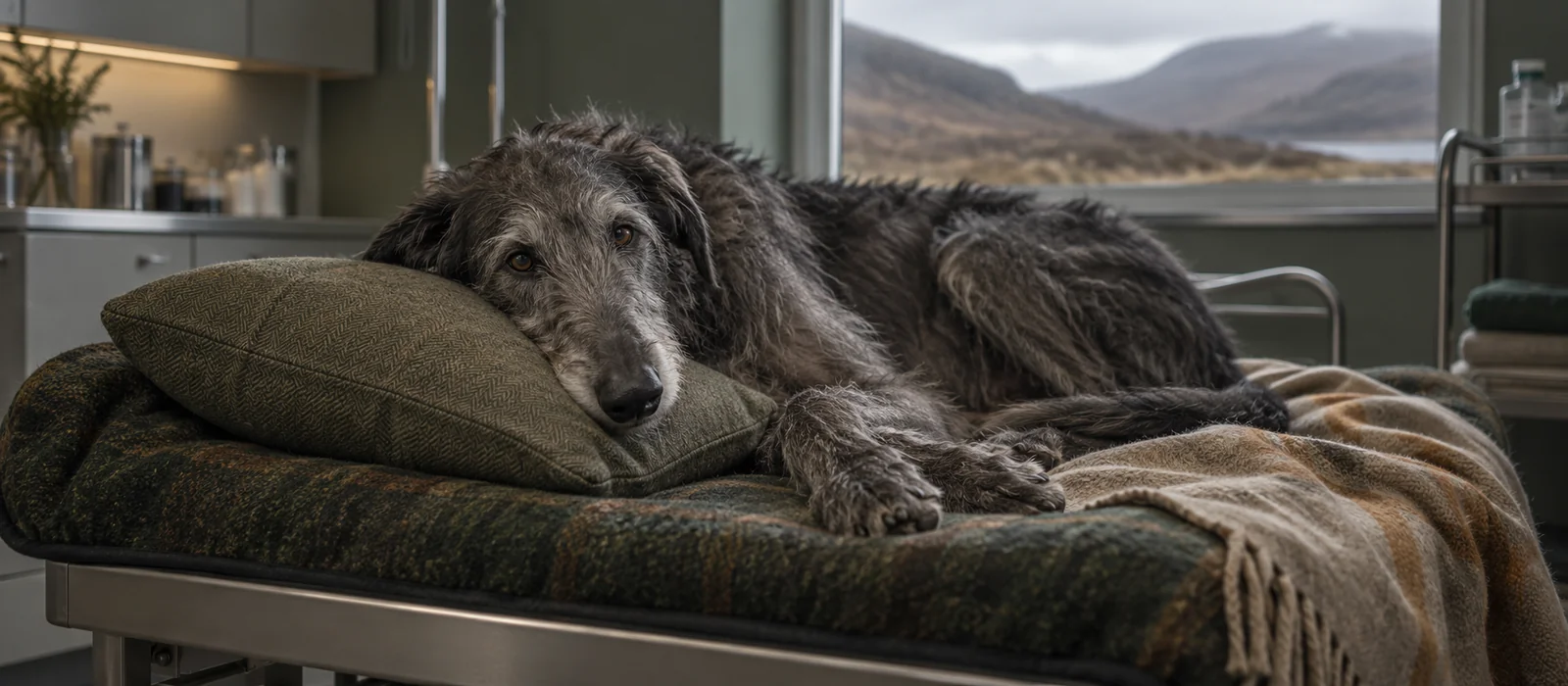
Scottish Deerhounds, like other sighthounds, have unique physiological characteristics that require specialist knowledge from veterinarians. Understanding these differences helps ensure safe anesthesia, accurate diagnosis, and appropriate treatment when your deerhound needs medical care.
Why sighthounds are different
Sighthounds including deerhounds have evolved over centuries for speed and endurance in pursuit of prey. This heritage has shaped their physiology in ways that matter in the veterinary clinic. Compared to other dog breeds, sighthounds have lower body fat, lean muscle mass, unusual blood chemistry, and differences in how their livers process certain drugs. A vet unfamiliar with these traits may misinterpret test results or choose inappropriate treatments.
Anesthesia and barbiturates
The most critical difference is how sighthounds metabolize barbiturate-based anesthetics. Their livers have lower amounts of the oxidative enzymes needed to break down barbiturates like sodium pentobarbital or thiopental. This means these drugs clear from the bloodstream more slowly, potentially causing prolonged sedation or deeper anesthesia than intended. Modern veterinary practice has largely moved away from barbiturate anesthetics in favor of safer alternatives such as propofol, alfaxalone, or protocols using local anesthesia and sedation. However, it remains essential to inform any vet that your deerhound is a sighthound before anesthesia, so they can choose the safest protocol for your dog.
Blood values and diagnosis
Sighthounds have naturally higher red blood cell counts and lower platelet counts than other dogs. A vet unfamiliar with this variation might misinterpret these results as signs of illness when they are normal for the breed. Similarly, total protein levels and other chemistry values may sit at different ranges. Request that your vet notes your deerhound’s breed and considers these normal variations when reading blood work. If you have baseline results from a previous vet visit, sharing those with a new vet helps them understand your individual dog’s normal range.
Post-surgical bleeding
Sighthounds have a genetic tendency toward excessive bleeding after surgery, particularly following castration or spaying. A clinical study of retired racing greyhounds published in the Journal of Veterinary Internal Medicine found that a substantial proportion of dogs bled excessively in the days after routine neutering. This risk is linked to a condition called hyperfibrinolysis, where the blood’s fibrin-dissolving system becomes overactive. Dogs with this tendency may bleed from the surgical site hours or even days after surgery, rather than during the procedure itself. Deerhounds, as close relatives of greyhounds within the sighthound group, are generally considered to share some of this bleeding tendency, though the research has focused on greyhounds specifically. If your deerhound requires surgery, discuss this breed-specific risk with your vet and ask whether an antifibrinolytic medication should be given as a preventative measure. Ensure your vet is prepared to manage postoperative bleeding and that you have clear instructions on monitoring the surgical site after discharge.
Insecticide sensitivity
Sighthounds’ low body fat and lean build also mean that some parasite treatments and other medications can behave differently in their systems than in more typically-built breeds, since drug distribution depends partly on body composition. Always inform your vet that your dog is a sighthound before starting any new flea, tick, or worming product, and ask them to confirm it is appropriate for a lean, giant-breed dog.
Choosing a sighthound-aware vet
Look for a practice with experience treating sighthounds, greyhounds, or other sight hound breeds. A good starting point is asking your deerhound’s breeder or local breed club for recommendations. When contacting practices, ask directly: “Do you have experience with sighthounds and their anesthetic requirements?” A vet who has treated greyhounds, whippets, Irish wolfhounds, or other sighthounds will be familiar with these considerations. If your regular vet is not sighthound-experienced, share relevant information before procedures and consider consulting a specialty or referral practice for complex cases.
Routine health checks and screening
Annual vet visits are the standard recommendation for adult dogs, covering a general health check, vaccination boosters where appropriate, and parasite screening. Discuss with your vet whether additional screening is appropriate for your deerhound—for example, cardiac checks if there is a family history of heart disease. Ask your practice whether breed-specific screening schemes exist that could benefit your deerhound.
Pet insurance and planning costs
Unexpected veterinary bills can be substantial, particularly for emergency surgery or prolonged treatment. Pet insurance designed for large or sighthound breeds may cover accidents, illnesses, and routine care depending on the policy. Read any policy carefully to understand exclusions, waiting periods, deductibles, and whether genetic or hereditary conditions are covered. Some policies exclude pre-existing conditions, while others cover congenital issues if the condition was not diagnosed before enrollment.
Consider also building an emergency fund or credit facility, since immediate care cannot be delayed to wait for insurance approval or reimbursement. Many vets offer payment plans for costly procedures, and charities such as the Dogs Trust provide financial assistance to pet owners in genuine hardship. When choosing insurance, compare policies designed specifically for large breeds, as general policies may have lower benefit caps that don’t adequately cover a large dog’s treatment costs.
Vaccinations and parasite prevention
Deerhounds require regular vaccinations against leptospirosis, parvovirus, and distemper, typically given initially as puppies and then boosted annually or every three years depending on your vet’s recommendation and the vaccine protocol. Parasite prevention (flea, worm, and tick treatments) should be ongoing year-round or seasonally. Discuss breed-appropriate products with your vet; as mentioned, sighthounds are sensitive to certain insecticides, so products must be selected carefully.
Microchipping is legally required in the UK by age eight weeks and must be registered on an approved database; check with your vet to ensure this requirement is met.
Key points
- Tell every vet that your dog is a sighthound; this affects drug choice and test interpretation.
- Barbiturate anesthetics are risky for sighthounds; ensure your vet uses modern, safer alternatives.
- Blood work results may differ from other breeds; ask your vet to note breed-normal ranges.
- Post-surgical bleeding is a real risk in sighthounds; discuss preventative measures before spaying or neutering.
- Use flea and tick products recommended for sighthounds, not general products.
Related: Deerhound help near you