Home › Guides › Buying a Scottish Deerhound Puppy: Price and Checks
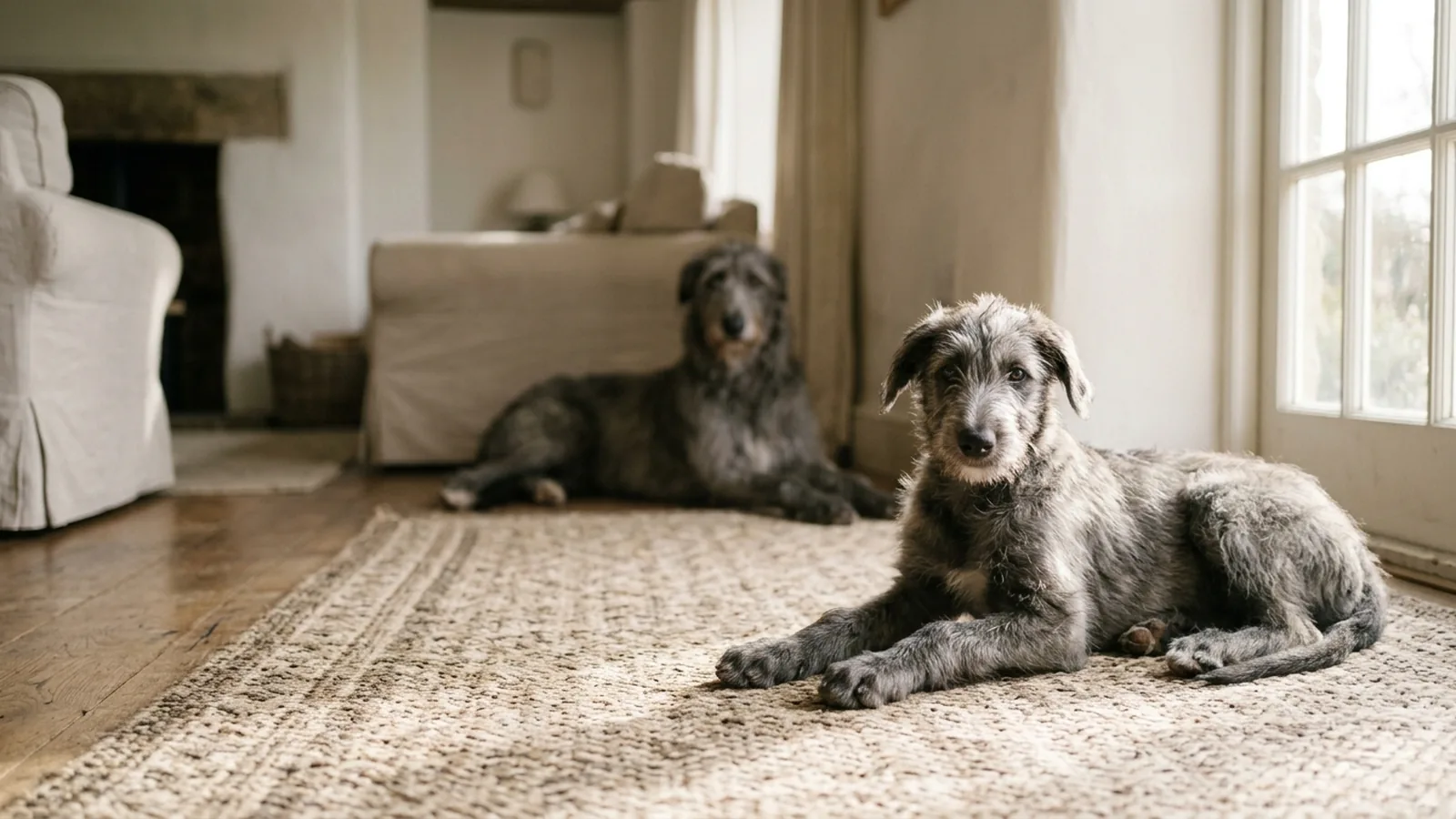
A Scottish deerhound puppy from a reputable breeder in the UK costs around £2,000, according to Countryfile’s April 2026 feature on the breed. That figure is a rough guide, not a fixed price, and it can change between breeders and regions. The bigger question is what the price should buy you: a puppy whose parents have been health screened, a breeder who answers your questions, and papers you can check.
This guide covers the likely cost, what an adult deerhound needs, the health conditions to know about, and the checks to make before you hand over any money.
How much does a Scottish deerhound puppy cost?
Countryfile reported that a puppy costs about £2,000 today. The same feature said that about 300 births are registered each year, so puppies are not common.
Be cautious about any advert that offers a deerhound puppy far below that level, especially one with no health information. A very low price can mean the parents were not screened, the puppy has no proper paperwork, or it is not what the seller says it is.
Ongoing costs are a bigger part of the picture. The PDSA estimates the minimum cost of keeping a deerhound at £105 a month, not including veterinary treatment. A large dog eats more, needs more space, and can need expensive care if it becomes ill. Plan for that before you buy.
How big does a deerhound get?
The deerhound is a large sighthound. The PDSA’s breed guide gives an adult size of 71 to 76 cm at the shoulder and a weight of 35 to 45 kg. Countryfile gives a similar height and weight range.
Size matters at home. Check that your car, doorways, bed, garden and any stairs can handle a dog that size. A puppy grows fast, and it can be hard to picture the adult dog until you have seen one.
How long do deerhounds live?
Both the PDSA and the Kennel Club describe the average lifespan of the breed as over 10 years. Plan for a deerhound as a commitment of a decade or more.
What is the temperament like?
The Kennel Club describes the breed as having a gentle temperament. The PDSA describes it as aloof but trustworthy, and generally gentle and good with children. Early socialisation matters. A puppy that meets many people, places and sounds while young is more likely to grow into a confident adult.
Deerhounds also have a strong chase instinct. They can be hard to recall once they have spotted something to chase, so exercise in a secure area is important.
How much exercise does a deerhound need?
The PDSA says the breed needs at least two hours of exercise a day. The Kennel Club’s breed page gives a similar figure, saying more than two hours daily. Much of that time should be spent in enclosed spaces, because of the chase instinct.
Being calm indoors does not replace daily exercise, so plan for walks every day, not just at weekends.
What is the grooming like?
The coat is medium length and needs brushing two or three times a week, according to the PDSA. Adult coats are especially prone to matting, so regular brushing is far easier than sorting out knots later.
What health problems should you know about?
The PDSA lists several conditions in the breed. You should know what they are before you buy:
- Gastric dilatation volvulus (bloat). The stomach twists. This is an emergency that needs urgent veterinary care.
- Portosystemic shunt. Blood bypasses the liver.
- Dilated cardiomyopathy. The heart muscle weakens over time.
- Osteosarcoma. A form of bone cancer.
Not every deerhound will develop these conditions. Still, they are the reason why a breeder’s health checks matter. Because the PDSA treats bloat as an emergency, find out which vet would see your dog out of hours and how quickly they can be reached.
What should you check before you buy?
A responsible breeder should be willing to answer questions and show you evidence. The PDSA advises checking that the puppy’s parents have been screened under the British Veterinary Association and Kennel Club Canine Health Schemes. It also suggests asking about the health history of the parents and grandparents.
Use this checklist when you speak to a breeder:
- Ask to see the health screening results for both parents, not just a promise that they were tested.
- Ask about the medical history of the parents and grandparents, including heart problems and cancer.
- Ask to see the puppy with its mother, and ask how the puppy has been raised.
- Check the registration paperwork and any health certificates, and make sure they match the dog you are buying.
- Ask what the breeder will do if the puppy becomes ill or you can no longer keep it.
- Be wary of pressure to pay quickly, meet at a neutral location, or buy without seeing the dog.
If a breeder cannot show you any health evidence, walk away. A good breeder will expect these questions.
Red flags to watch for
- No health screening results for the parents
- A puppy kept away from its mother, or a meeting that takes place somewhere other than the breeder’s home
- Several litters for sale at the same time from one seller, with no clear reason
- No written contract, guarantee or aftercare details
- Pressure to pay a deposit before you have met the puppy
Key points
- A Scottish deerhound puppy from a UK breeder costs around £2,000, according to Countryfile’s April 2026 report.
- Adults are usually 71 to 76 cm tall and weigh 35 to 45 kg.
- Lifespan is over 10 years.
- The breed needs at least two hours of exercise a day, with enclosed spaces for safety.
- Known conditions include bloat, portosystemic shunt, dilated cardiomyopathy and osteosarcoma.
- Ask for health screening results for both parents before you buy.
Frequently asked questions
How much does a Scottish deerhound puppy cost in the UK?
Countryfile reported a price of around £2,000 in April 2026. Prices vary, and a much lower price is a reason to ask more questions.
How big do Scottish deerhounds get?
Adults are usually 71 to 76 cm at the shoulder and weigh 35 to 45 kg, according to the PDSA.
How long do deerhounds live?
The PDSA and the Kennel Club both describe the typical lifespan as over 10 years.
Are deerhounds good with children?
The PDSA describes the breed as generally gentle and good with children. Early socialisation is important for family life.
What should a breeder show me before I buy a puppy?
At minimum, ask for health screening results for the parents under the British Veterinary Association and Kennel Club Canine Health Schemes, and ask about the family’s medical history.
Is a deerhound a good first dog?
It can be, for the right owner. A deerhound needs space, daily exercise, regular grooming and a secure place to run. If you are unsure, spend time with the breed before you commit.
Next steps
Before you buy, make sure you have the space, time and budget for a dog of this size for well over a decade. Speak to the breeder, ask for proof of health checks, and visit the puppy with its mother if you can. If you are unsure, talk to your vet about what to expect from the breed.
Gentom Deerhounds is an archived website for a Staffordshire deerhound kennel. The kennel no longer breeds and has no puppies for sale, but the breed guides on this site cover topics such as bloat, buying a puppy, grooming and senior care, and they may help you prepare.
This article is general information. For advice on a particular dog’s health, speak to a qualified vet.